In healthcare, technology alone is never enough.
The most trusted platforms are built with a clinician’s lens at the center, grounded in real-world care delivery and shaped by firsthand experience navigating complex insurance, pharmacy, and patient access workflows.
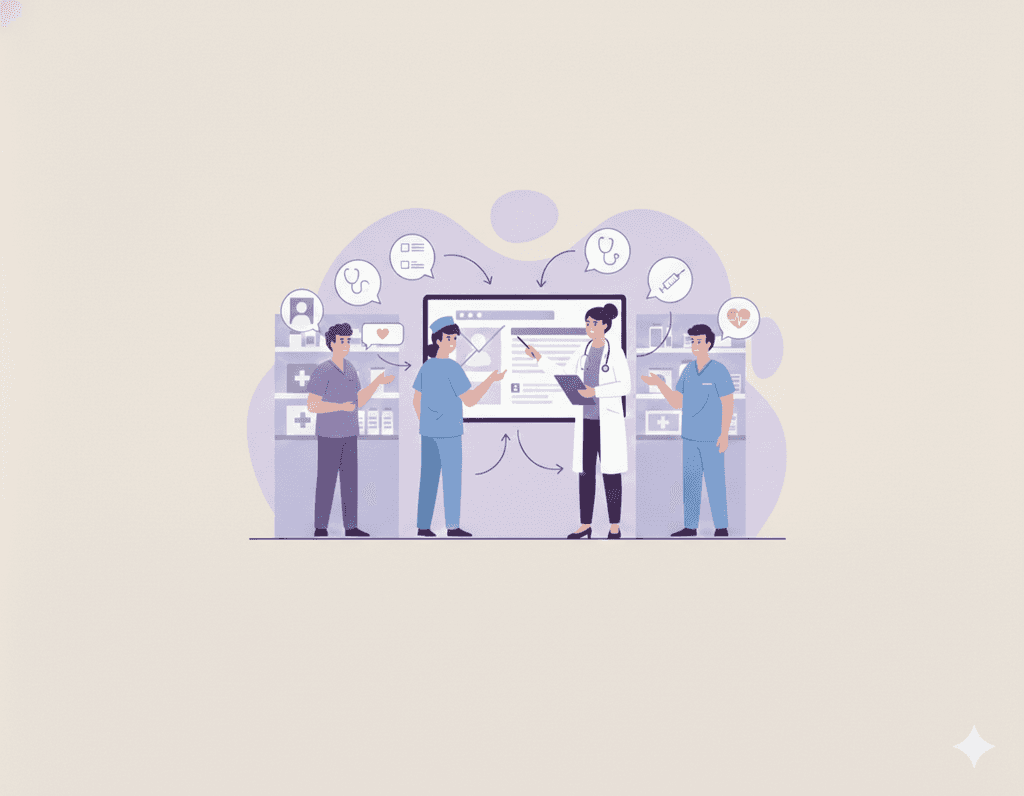
At Forus, our Clinical Intelligence team is the engine behind that philosophy—ensuring every product decision reflects how care happens in practice.
Led by Adam Harris, MD, along with experienced advanced practice clinicians like Kathleen Alvarez, NP, Forus’ Clinical Intelligence team is setting a new bar for how healthcare AI should be built, validated, and scaled.
What is Clinical Intelligence at Forus?
Clinical intelligence at Forus sits at the intersection of medicine, operations, and product development. The team is embedded across the entire product lifecycle to ensure that:
- Forus’ processes mirror real clinical workflows
- Automation aligns with payer rules, clinical guidelines, and specialty-specific nuance
- Product decisions are informed by direct patient and provider experience
While many healthcare software companies rely on external advisors or periodic clinical reviews, Forus embeds clinical expertise directly into product design, QA, and continuous improvement.
Meet the Clinical Intelligence team

Dr. Harris leads Clinical Intelligence at Forus and previously served as VP of Applied AI at Oscar Health. He is an active practicing physician at Bellevue Hospital Center and Clinical Assistant Professor of Medicine at NYU School of Medicine.
Trained across federal, safety-net, and private academic hospitals across New York City, Dr. Harris saw firsthand how differences in system design—not medical science—often determine patient experience and outcomes.
As a practicing physician with deep insurance operations and AI experience, Adam brings firsthand insight grounded in navigating payer complexity and specialty-specific nuances. His role goes beyond review and approval—he actively partners with product, engineering, and operations to ensure Forus’ platform reflects real clinical practice, not idealized versions.

Kathleen Alvarez brings a frontline clinician’s perspective to Forus’ Clinical Intelligence team.
After graduating from the Yale School of Nursing, Kathleen’s career spanned across a variety of settings before joining Forus. From street medicine during the COVID-19 pandemic, to working in primary care and rheumatology practices, prior authorizations quickly became a constant, disruptive part of her day as a nurse practitioner.
Much of Kathleen’s time was spent managing insurer calls, drafting medical necessity letters, and coordinating appeals—often squeezed in between patient visits or after a full clinic day. That experience now shapes how she approaches her work at Forus, with a focus on designing workflows that respect clinicians’ time.
Her perspective ensures Forus’ automation feels supportive, not burdensome, for the teams who rely on it.
Clinical Intelligence that scales with care
Clinical intelligence is what makes scale possible—and scale is what makes clinical intelligence stronger.
Built on deep clinical expertise, Forus supports millions of prescriptions every year across a growing number of specialties. Thousands of clinicians rely on Forus daily to manage complex medication access workflows with confidence.
As Forus scales, our Clinical Intelligence team continuously learns from real-world use—identifying patterns, adapting to payer changes, and refining workflows so every customer benefits. What might be a one-off edge case in a single practice becomes a platform-wide improvement at scale. Clinical intelligence isn’t just embedded at the start—it compounds as the platform grows.
That feedback loop is why leading health systems, enterprise groups, and specialty organizations trust Forus, and how we are able to continuously improve medication access for patients.